





SSOW Orlando 2026 brought together shared services and finance leaders who are navigating some of the most complex shifts in Order‑to‑Cash (OTC) and Procure‑to‑Pay (P2P). Across roundtables, fireside chats, and hallway conversations, the message was consistent: cash flow, customer experience, and productivity are now tightly intertwined — and AR automation is becoming the lever leaders trust to bring it all together.
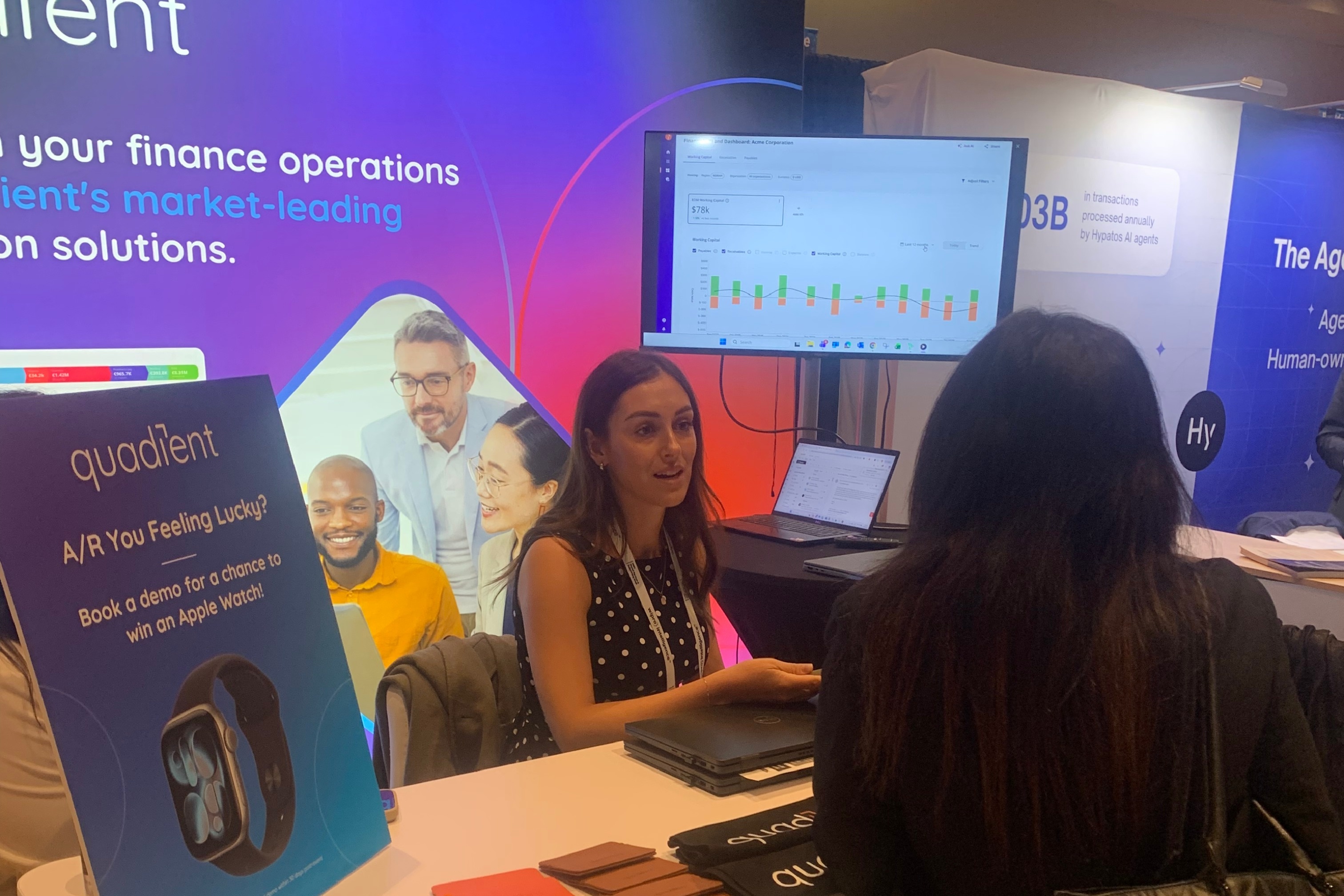
Quadient Team joined the event to host discussions on autonomous cash flow and customer communications, and what we heard reaffirmed a clear, growing truth: AR teams are under pressure to improve outcomes, but the barriers holding them back are operational, data‑driven, and cross‑functional — not just “collections problems.”
Here are the themes that defined SSOW 2026.
1. Process inefficiencies remain universal — and a major barrier to cash flow
Regardless of size or industry, organizations echoed the same operational pain points:
- Fragmented systems with limited integration
- Manual, repetitive processes that slow down cash flow
- Siloed, inconsistent data limiting visibility
- High levels of disputes, deductions, and exceptions that consume team capacity
Many finance leaders described dispute resolution and cash application as some of the most convoluted areas of their workflow — and simultaneously, some of the greatest opportunities for improvement through automation.
Companies know they need automation in AR, but they want it deployed in a way that strengthens the entire customer‑to‑cash cycle, not just one step. 97% of Quadient AR customers would recommend exploring the Quadient AR Automation solution.
2. AI is everywhere — but leaders want it to be intentional, explainable, and tied to outcomes
AI was a major talking point, with nearly every leader expressing interest in adopting it. But enthusiasm came with healthy skepticism.
Leaders asked questions like:
- “How do we ensure AI delivers real value if our data isn’t clean?”
- “How do we keep control over decisions when AI is involved?”
- “How can we use AI without losing human oversight?”
There was a strong preference for AI that supports human teams — by providing insights, risk signals, and recommendations — rather than AI that replaces direct customer contact.
One theme came up repeatedly: Insights matter only if they drive action. “We do not want ‘so‑what metrics.”
This aligns directly with how Quadient applies AI inside AR workflows: explainable, auditable insights that strengthen decision‑making, credit control, and forecasting — not black‑box automation.
3. Measuring productivity is shifting from activity-based metrics to outcome-based metrics
Leaders were vocal about the need to rethink performance measurement. Traditional KPIs like call counts or email volume no longer represent real productivity.
Instead, teams want to measure:
- Quality of customer touchpoints
- Resolution of disputes and blockers
- Movement of cash
- Impact of communication timing and channel
- Cross‑functional alignment and visibility
The consistent sentiment: five meaningful customer conversations matter more than one hundred automated messages that produce no results.
Automation is seen as a way to remove administrative noise, so AR teams can focus on the activities that truly accelerate cash. ‘Metrics Matter: 7 KPIs to Elevate your AR Performance’ dives deep into key areas of process improvement.
4. Friction in the customer payment experience slows down cash more than back-office inefficiencies
This was a standout point in the fireside chat sessions.
Reducing friction — with simplified payment options, customer portals, and automated reminders — consistently delivers faster results than trying to squeeze more efficiency inside the finance department.
Leaders emphasized:
- The need for easier, more modern payment experiences
- Clear visibility for customers into what they owe and why
- Seamless digital communication channels
This shift reflects a broader trend: Cash flow accelerates when paying is easy — not when teams chase harder.
5. Cross‑functional alignment (especially with sales) is becoming essential
Another strong theme: Some of the biggest drivers of Days Sales Outstanding (DSO) happen long before collections begin. Pricing errors, contract issues, and shipment discrepancies were cited as root causes of disputes and payment delays.
Leaders reinforced that:
- Sales behavior heavily influences AR outcomes
- Providing sales teams with real‑time AR and customer risk insight can prevent issues
- Visibility—shared across functions—is a growing requirement, not a luxury
“Sales reps are either part of the problem or part of the solution.”
If these challenges sound familiar…
The discussions at SSOW 2026 reflect what many finance and shared services leaders are experiencing today: a need to accelerate cash flow while navigating uncertainty, talent shortages, and evolving customer expectations.
AR automation isn’t just about speeding up collections — it’s about building a more connected, intelligent, and resilient financial operation.
If you’d like to see how Quadient AR helps organizations reduce friction, gain visibility, and make smarter decisions across customer‑to‑cash:
👉 Book a personalized demo
👉 Explore Quadient AR resources
Because the takeaway from SSOW Orlando was clear: the future of AR is not just automated — it’s intentional, insight‑driven, and built for real‑world complexity.