


















Introduction
Are you looking for a way to simplify your mailing process and save on postage expenses? Metered mail might be the solution you need, and getting started is easier than you might think.
Metered mail is mail with postage printed by a USPS®-approved postage meter instead of being paid for with traditional stamps. It can help businesses calculate postage, prepare outgoing mail, and track mailing expenses.
This guide explains how to choose, set up, and use a postage meter.
Key takeaways
A postage meter prints the required postage directly onto an envelope or an approved label.
Postage meters are leased or rented from authorized providers rather than purchased by businesses.
A meter can calculate postage, speed up mail preparation, and help businesses monitor mailing expenses.
Eligible First-Class Mail® letters cost less with metered postage than with stamps.
Businesses should compare mail volume, equipment features, lease terms, service fees, and supplies before choosing a postage meter.
How does metered mail work?
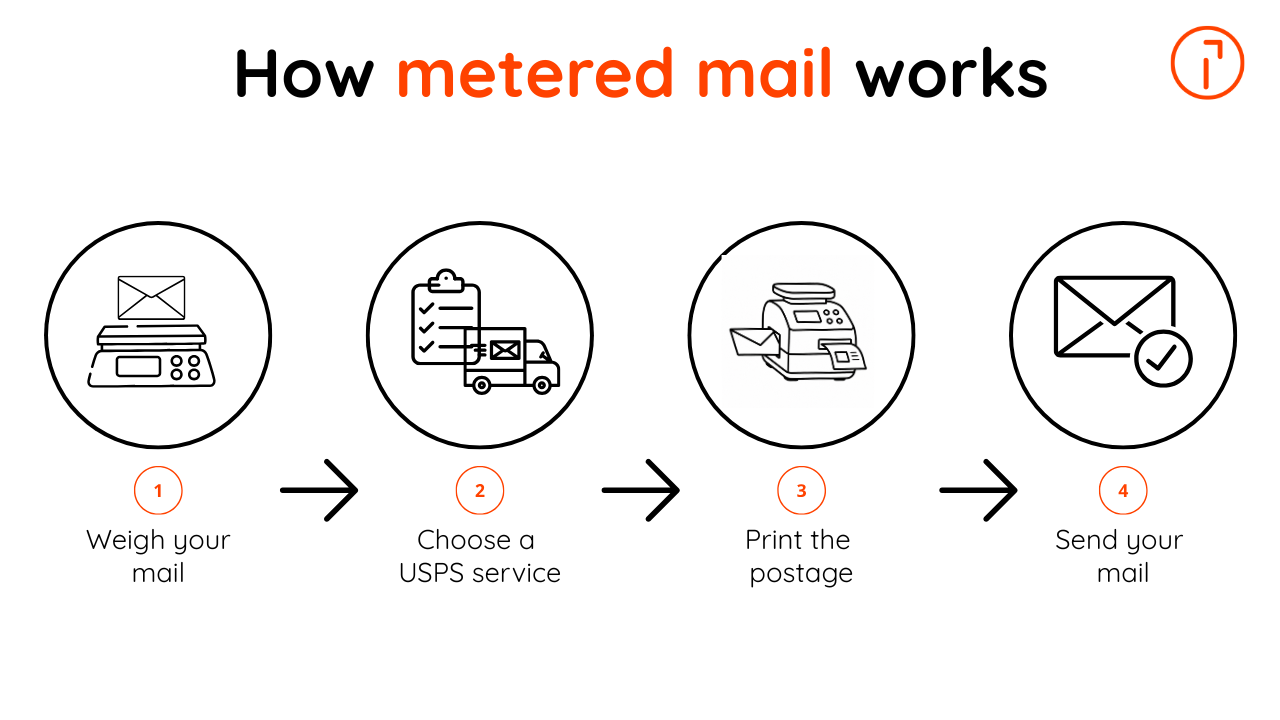
Metered mail is a postage solution designed to simplify the mailing process for businesses. Instead of using traditional stamps, businesses use postage meters to print the required postage directly onto an item or onto a label that can be affixed to it. This technology offers several advantages, making it a popular choice for business mailers of all sizes.
The postage meter industry is closely regulated because printed postage is evidence that the required mailing charges have been paid. USPS regulates postage meters and other postage evidencing systems to protect postal revenue. USPS-approved postage meters are leased or rented from authorized providers rather than purchased by customers.
What are the benefits of metered mail?
Metered mail helps businesses calculate accurate postage based on the selected mail service, weight, size, and destination. It helps reduce manual work, prevent postage errors, and speed up mail preparation.
Businesses can add postage funds to the meter electronically and monitor usage without making frequent trips to the Post Office. Eligible single-piece First-Class Mail letters also qualify for a lower metered-mail price than letters mailed with stamps.
Which USPS mail services can you use?
USPS offers several mail and shipping services, each with different delivery standards, prices, weight limits, and requirements.
Priority Mail Express®
Priority Mail Express is the fastest USPS domestic shipping service. It offers money-back-guaranteed delivery in 1 to 3 days to most US addresses and PO Boxes, subject to eligibility and exceptions.
Priority Mail®
Priority Mail is designed for time-sensitive packages, with expected delivery in 2 to 3 days. Delivery is not guaranteed.
First-Class Mail
First-Class Mail is used for postcards, letters, bills, statements, and large envelopes. It is not available for packages that can be sent via USPS Ground Advantage®, Priority Mail, or another eligible package service.
USPS Ground Advantage®
USPS Ground Advantage is an affordable service for sending packages weighing up to 70 pounds, with expected delivery in 2 to 5 business days.
USPS Marketing Mail®
USPS Marketing Mail is a commercial service used for advertising, flyers, circulars, newsletters, catalogs, and certain small parcels. Mailings must generally contain at least 200 addressed pieces or 50 pounds of addressed mail and meet applicable preparation requirements.
What determines USPS postage prices?
USPS postage prices are based on several factors, including:
The mail or shipping service selected
The weight, shape, and size of the mailpiece
The distance or shipping zone for services that use zone-based pricing
Whether retail or commercial prices apply
Additional services, such as insurance or Certified Mail®
Applicable volume, sorting, barcoding, and preparation requirements
USPS periodically updates its prices. See the latest USPS postage rates to estimate your mailing costs.
USPS also offers commercial prices and promotional discounts for qualifying business mailings. These savings may require minimum mailing volumes, specific preparation, presorting, documentation, permits, or other eligibility requirements. Using a postage meter alone does not qualify every mailing for commercial prices.
How do USPS mail services compare?
USPS mail services differ by delivery time, weight limit, tracking, and intended use. The table below compares the main services available for metered mail.
USPS service | Best for | Expected delivery | Maximum weight | Tracking |
Priority Mail Express | Sending urgent documents and packages | 1 to 3 days, with a money-back guarantee where eligible | Up to 70 pounds | Included |
Priority Mail | Sending time-sensitive packages | 2 to 3 days, not guaranteed | Up to 70 pounds | Included |
First-Class Mail | Sending postcards, letters, and large envelopes | 1 to 5 days, not guaranteed | Up to 3.5 ounces for letters; up to 13 ounces for retail flats | Not included for letters |
USPS Ground Advantage | Sending packages affordably | 2 to 5 business days, not guaranteed | Up to 70 pounds | Included |
USPS Marketing Mail | Sending eligible advertising and bulk mail | No guaranteed delivery timeframe | Up to 20 ounces for most pieces; up to 24 ounces for carrier-route flats | Available for eligible parcels |
Delivery times, features, and eligibility are subject to USPS requirements and exceptions.
How do you get started with metered mail?
Follow these seven steps to get started.
Step 1: Assess your mailing demands
Before diving into metered mail, assess your mailing requirements. How much mail do you send in a week? Are you sending letters, large envelopes, packages, or a combination of these items?
Take the time to track your mailings for a week or two to accurately assess the amount of business mail you send. Understanding your needs is key to selecting the right metered mail solution.
Step 2: Pick the right metered mail equipment
There are various types of postage meters available, each with distinct features and advantages. Conduct thorough research and select a mailing system that aligns with the specific needs of your business.
Consider factors such as mail volume, mail type, processing speed, reporting tools, and additional features such as an integrated scale. You should also compare lease terms, maintenance fees, supplies, support, and other ongoing costs.
Providers of USPS-approved postage meter equipment include Quadient, Pitney Bowes, and FP Mailing Solutions. Confirm the provider's current USPS authorization before entering into an agreement.
Step 3: Complete the registration process
Next, you'll need to establish an account and lease your postage meter from an authorized provider. This involves providing information about your business and agreeing to the provider's terms and conditions.
Your provider will help you set up your account and complete any required meter applications.
Step 4: Set up your postage meter
Once your account is approved, you'll receive your postage meter. Follow the provided instructions to set up the meter correctly. Depending on the system, this may include connecting an integrated scale, establishing an internet connection, and linking a postage-funding account.
Most systems have user-friendly interfaces designed to make installation straightforward. If you face any challenges, contact your provider's customer support team.
Step 5: Load funds onto your meter
Now that your meter is set up, it's time to add postage funds. Many metered mail systems offer online platforms or applications for managing postage.
This flexibility enables you to manage your postage from your office. Monitor your available balance and funding activity to avoid disruptions in your mailing operations.
Step 6: Weigh and meter your mail
You are now ready to print postage directly onto your envelopes or approved labels using the postage meter.
Weigh and measure the mailpiece as required, select the correct USPS service, and enter any other necessary information. The meter will then calculate and print the applicable postage.
Check that the postage amount, address, mailing date where required, and other necessary information are correct. Some items must be presented at a Post Office because of their weight, shape, contents, or requested services.
Step 7: Monitor your usage
Proactively manage your postage costs by regularly monitoring usage and making adjustments as needed. Review your reports to understand postage spending by department, client, campaign, or mail type.
This step can help you optimize your mailing budget and ensure you have sufficient postage funds for your business needs.
Conclusion
Ready to improve your business mailing process? Metered mail can provide a more efficient way to calculate postage, prepare outgoing mail, and monitor mailing expenses.
The right solution will depend on your mailing volume, the items you send, and the features your team needs. Compare the total cost of the equipment, supplies, maintenance, and service fees before choosing a system.
Have questions or need help choosing the right mailing solution? Contact our team today to discuss your mailing requirements and find a system that fits your business.
