















Introduction
Considering a direct mail strategy for your customers but not sure if it’s the right approach? We get it. There’s an abundance of new, fresh marketing approaches to consider, and direct mail campaigns may seem old-fashioned by comparison. But they're far from forgotten.
In fact, direct mail marketing still produces a measurably strong response, despite competing with the latest digital marketing strategies.
In this article, we’ll cover everything you need to know about direct mail marketing, including why it still works for small businesses, how to plan, execute, and track a campaign, and what you need to get started.
What is direct mail marketing?
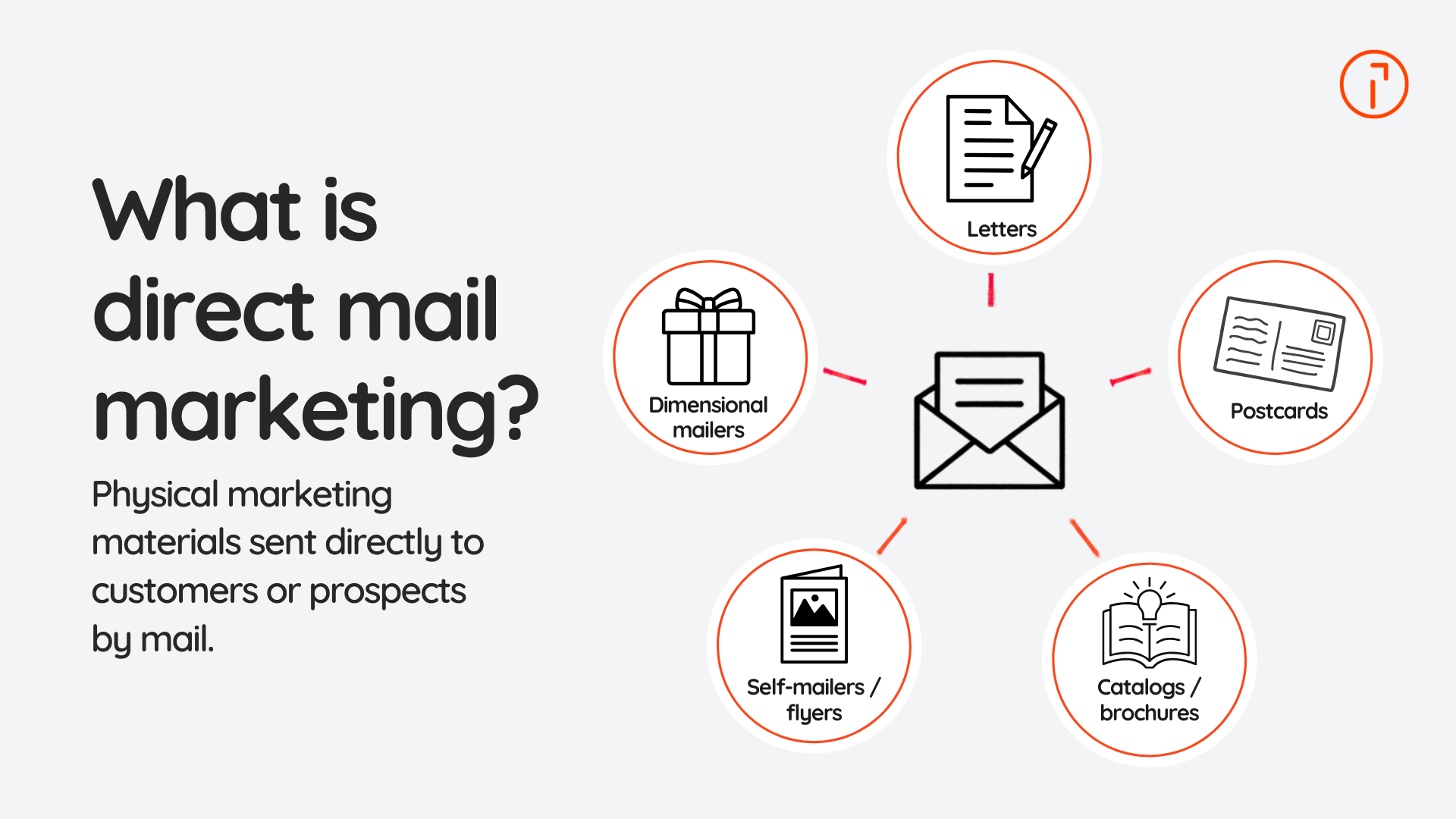
Put simply, direct mail strategies involve sending physical promotional or informational materials to someone’s address, such as:
Letters
Postcards
Catalogs/brochures
Self-mailers (like flyers)
Dimensional mailers (like boxes or 3D pop-ups)
You can send physical marketing material to a specific, targeted list of addresses defined by you, using customer data, mailing lists, or geographic filters (such as ZIP Codes).
Compared to email or digital-only, direct mail puts your business materials in your customer’s hands to hold, read, and keep. This makes it harder to ignore and creates a memorable sensory experience.
Plus, with direct mail marketing, there’s not as much competition. Inboxes are littered with countless promotional emails that often get deleted before opening, while physical mail has to be handled, and likely read, before being discarded, adding in that extra step for advertising.
Is direct mail marketing still effective for small businesses?
Direct mail for small businesses continues to work successfully, often outperforming digital channels. How? The results are in the numbers:
Direct mail averaged a 4.4% response rate versus 0.12% for email (Source: ANA 2025 Impact Pulse, formerly the Response Rate Report, ana.net/impactpulse2025), showing the far greater advantage compared to oversaturated digital mediums.
These results also hold for list quality: existing-customer lists respond at 5-9%, while cold prospect lists respond at 2-4.4%. (Source: ANA 2025).
For an SMB with a limited list and budget, this means you can target specific customers using a high-quality, smaller list without stretching the budget too thin - putting physical business materials in your audience’s hands.
Not only does this retain your budget for larger-scale marketing ventures, but you can send fewer resources with a measurable response, rather than a broad digital campaign with a low conversion rate.
How do you plan a direct mail campaign?
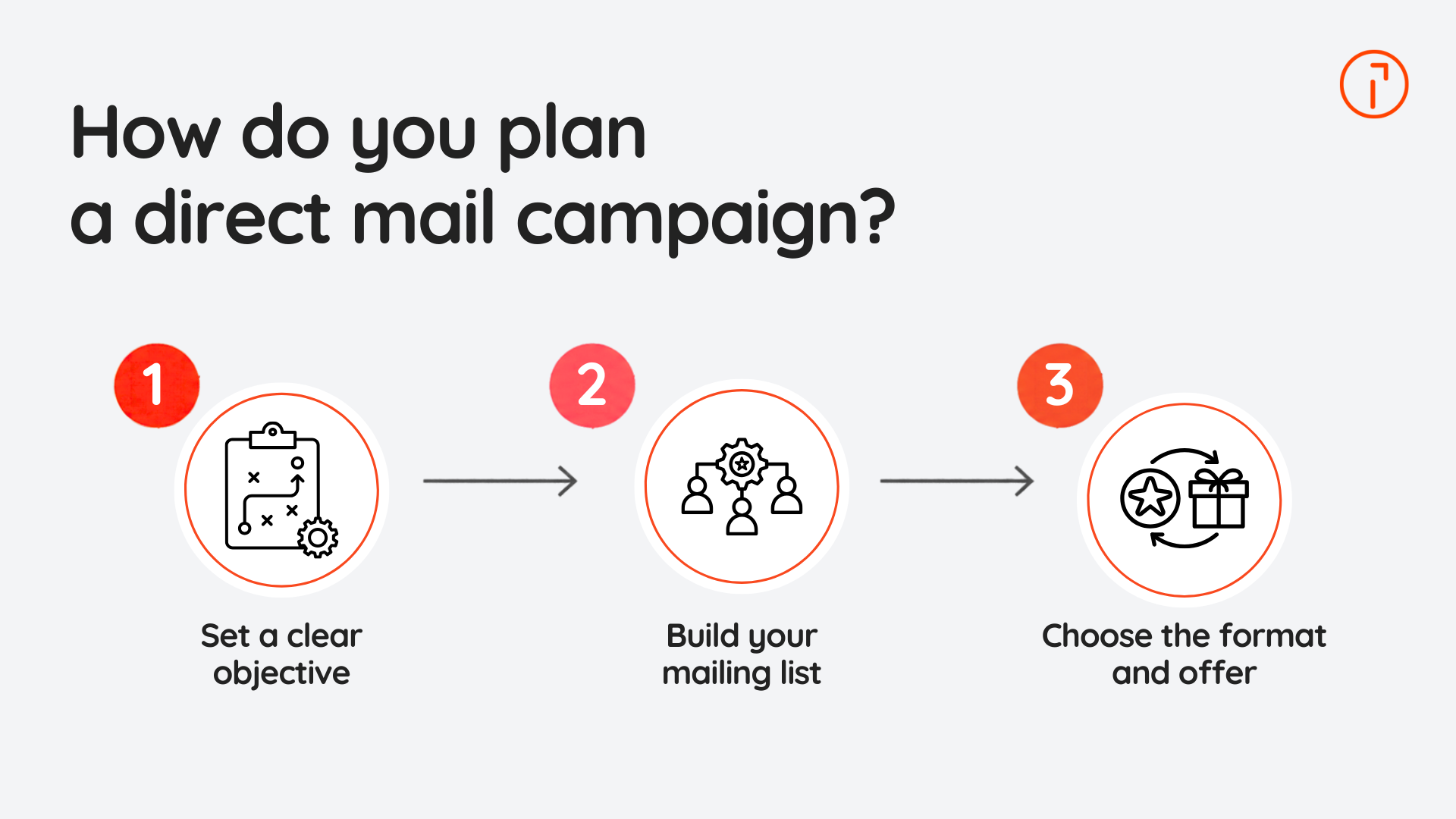
Now you’re in the know about why direct mail campaigns shouldn’t be ignored; let’s learn how to plan one. The following steps help you create campaigns that reach the right people with a relevant message:
1. Set a clear objective
Defining a clear, single objective is the first step in delivering a successful campaign. This could be new customer acquisition, reactivation of previous customers, or an event promotion.
It’s important to have this ironed out from the beginning to achieve the best results, as it will guide who to target and how to tailor your entire campaign.
2. Building your mailing list
Next, you can start putting together your mailing list around the objective or buyer persona. You can either build this from scratch (e.g., for new customers) or segment part of your existing customer database (e.g., if you’re targeting a specific ZIP Code).
3. Format & offer
You’ll then go on to select a format (e.g., a type of mail, such as a letter or flyer) and offer together, matching the format to how much the reader needs to absorb the information.
For example, choosing a postcard with a discount offer could work well for an event promotion, while a more in-depth brochure could be better for exploring a complex product.
How do you personalize a direct mail campaign?
As part of your planning and execution stage, personalization should be a key feature. Tailoring your offer to your target audience is really important for getting the right message across to your customers.
For your personalized direct mail campaign, there are plenty of tailoring options - you could personalize the offer itself, the imagery, the format, and/or messaging based on what’s known about the recipient, not just their name. You could also tailor it to their past interests (if they’re previous customers) and offer specialized discounts based on their history.
This is all possible with the help of variable data printing (easily changing details on each printed item) and mail automation tools (like our services at Quadient). These tools help businesses send smaller quantities of personalized mail instead of ordering a large print run.
By using these tools and direct mail personalization options, SMBs can differentiate themselves from competitors more affordably.
How do you send a direct mail campaign?
Now you know how to plan a campaign; next, we’ll learn how to send it and ensure it aligns with your overall objective.
First, it’s a good idea to work backward from your delivery date to plan the production schedule. When you want the campaign to go live will determine how long you have for printing, preparing the mail, and getting it into the postal system so it reaches the participants in time.
This is where automation becomes a key part of your work - removing the traditionally slow, manual parts of this stage (such as checking addresses and collating the mailing list). Mail automation software can help with many tasks, including barcoding, address validation and batching mail into the right order for processing.
In short, automation can reduce the manual work involved in preparing and sending direct mail campaigns.
Of course, your internal processes should include a quality check of the list and creative for the print run to ensure everything is as it should be and avoid any wasted spend.
How do you track and measure a direct mail campaign?
The most important part of direct mail marketing: how do you track the results from your campaign?
We understand that tangible measurability is one reason people hesitate to choose direct mail over a digital approach. But the right direct mail tracking and automation tools can easily highlight your ROI and successes and show where you can improve next time.
Standard methods for tracking direct mail include:
Unique promo codes
Personalized URLs (PURLs)
QR codes
Dedicated call-tracking numbers
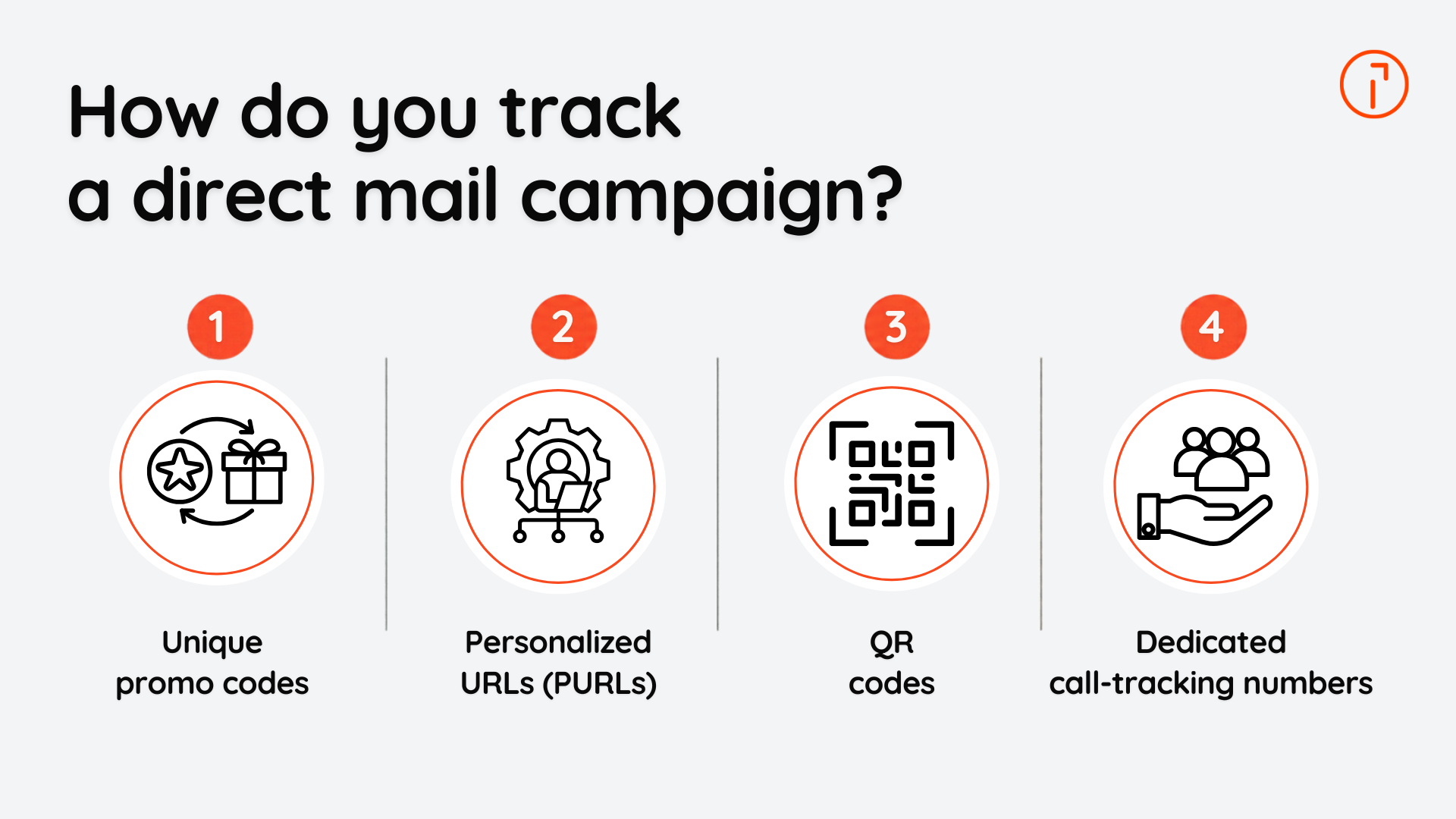
Using these methods in your campaign makes measuring success that much easier. When used alongside automation and mail tracking software, they can also make it easier to compare delivery information with campaign response data.
Before you send out your campaign, remember to set a response benchmark so results can be judged against something tangible. Because, as we’ve learned already, direct mail averages a 4.4% response rate (Source: ANA 2025), so having a rough benchmark reflective of your business and audience is key for measurability.
Getting started with direct mail marketing
We’ve detailed the logistics of setting up a campaign and covered the advantages of using automation tools - you’re now ready to get started with your direct mail marketing. Mail strategies alongside automation tools make campaigns manageable for teams of any size and at any scale.
To get started, remember to follow these steps:
Define one objective
Build out your customer list
Choose the most appropriate format
Send your campaign
Track against a real, tangible benchmark
Conclusion
At Quadient, we’re here to help your business operations move forward. We’ve learned a few things over the years, meaning our mail automation software is tried and tested. Let us help you handle production, tracking, and reporting of your direct mail marketing - all in one workflow.
Transformation doesn’t have to be hard. Simplify your direct mail campaigns with help from Quadient.