


















Is a postage meter worth it for small businesses? Costs, savings, and when to switch from stamps
September 28, 2026
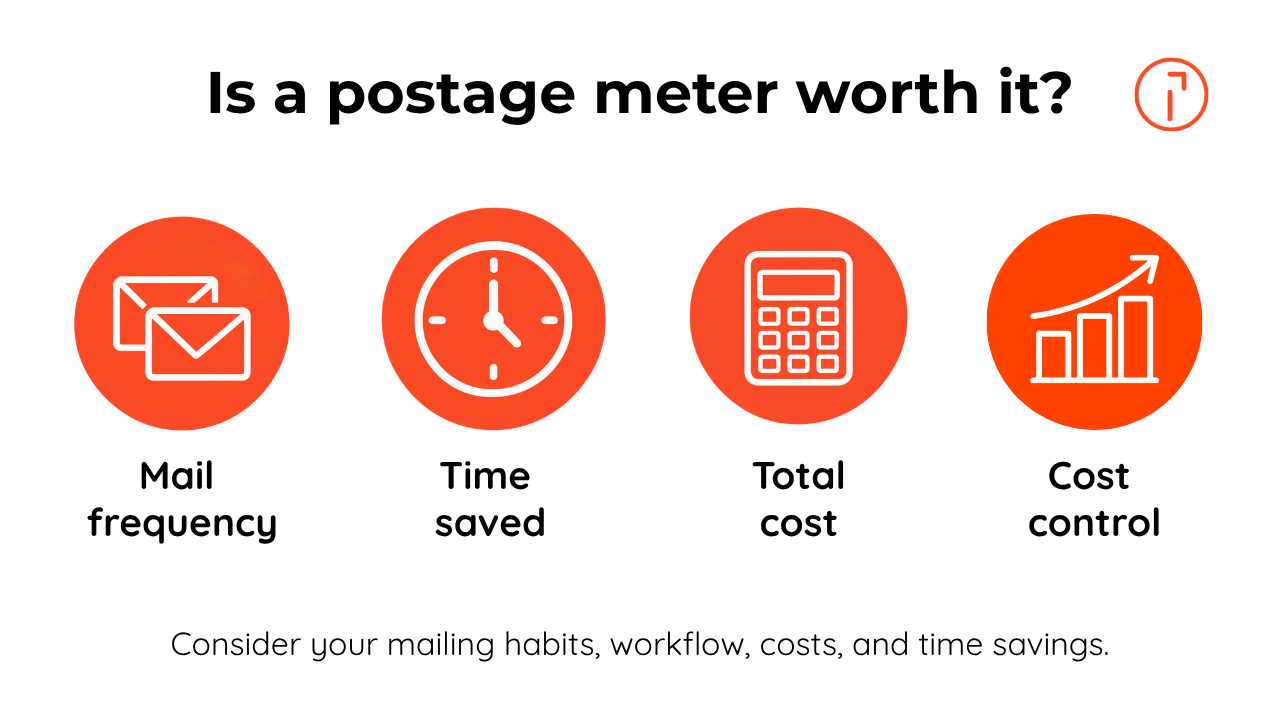
Short answer: Whether a postage meter is worth it depends on more than volume: mail frequency, workflow, time saved, cost control, and the meter's total cost. A meter prints postage on demand, tracks spending, and cuts Post Office trips, but the per-letter discount is small, and in the US you rent or lease a meter rather than buy it. For some businesses, stamps or online postage fit better.
A postage meter is a device that prints prepaid, USPS-approved postage, metered mail, directly onto envelopes or labels. This guide helps you decide whether one is worth it for your business, or whether stamps or another option is a better fit. It covers:
What a postage meter does and whether you can buy one
How postage meter costs and total cost of ownership work
Whether meters save money versus stamps in 2026
How meters compare with stamps and online postage
A checklist for when a meter is and isn't worth it
What does a postage meter do?
A postage meter weighs, rates, and prints exact postage for each piece of mail, so you skip the stamp drawer and the Post Office line. Most are part of a broader mailing system: the meter, an integrated scale that weighs each piece, and software that tracks spending. Because it prints the precise amount, a meter acts as a stamp replacement that also prevents the over-stamping that wastes money.
The postage itself works on refills: you load prepaid postage into the meter account and draw it down as you print, topping up when it runs low. That's separate from the machine itself, which brings us to how you actually get one.
Can you buy a postage meter, or do you rent or lease one?
You can't buy a postage meter outright in the U.S. Postage meters are federally regulated, so businesses rent or lease them from a USPS-authorized provider, including companies like Quadient, Pitney Bowes, and a handful of others the USPS licenses. A postage meter rental is typically a shorter, simpler commitment; a postage meter lease usually runs multiple years at a lower monthly rate.
This matters for the "worth it" question because it means a meter is an ongoing commitment, not a one-time purchase. You're signing up for a monthly cost whether you send 50 pieces or 5,000 that month.
How much does a postage meter cost, and what's the total cost of ownership?
Postage meter pricing has more moving parts than the headline rental rate. The monthly rental or lease is just the start; the total cost of ownership (TCO) also includes postage refills, postage meter ink, labels, and other postage meter supplies, plus any account or reset fees. A cheap-looking meter with pricey ink and fees can cost more than a higher-tier plan.
To size it up honestly, add the recurring costs and compare them to what you'd spend on stamps:
Total monthly cost = meter rental or lease + postage + ink and supplies + account fees
Monthly postage savings = eligible letters mailed × savings per letter
Then compare those postage savings, plus the time you'd save on mail preparation and tighter cost control, against the meter's total monthly cost. That comparison is the meter's real return on investment (ROI).
Do postage meters save money compared with stamps?
Yes, but less than most people expect; the savings come from time and control more than postage. Under current USPS postage rates, the per-letter discount is real but small.
Key statistic: As of the July 12, 2026 USPS price change, a 1-ounce First-Class letter costs $0.82 with a Forever stamp versus $0.78 metered, a 4-cent discount for metered mail.
Four cents per letter adds up only at volume. Send 500 letters a month and metered postage saves about $20; often not enough to cover a meter's fixed monthly cost on its own. That's why postage savings are only part of the calculation. Time saved preparing mail and better control over postage spending can also contribute to the value of a meter. For more detail, see how much you can save with a postage meter.
Postage meter vs. stamps vs. online postage
A meter isn't the only way to skip the stamp drawer. Online postage lets you print USPS postage from a computer (through services like Stamps.com or USPS Click-N-Ship) without leasing hardware, while shipping software can suit businesses that send parcels and print-and-mail services can suit businesses that want to outsource mail preparation and delivery.
Postage meter | Stamps | Online postage | |
Best fit | Steady letter volume | Very low volume | Low-to-mid, mixed mail |
Workflow | Print on demand, on-site | Buy and stick | Print from a computer |
Cost factors | Rental, supplies, fees | Face value only | Subscription + postage |
Reporting | Built-in spend tracking | None | Basic online reports |
Convenience | High for letters | Low at volume | High, no hardware |
The real split is hardware and workflow, not the discount: a meter suits consistent, on-site letter mail, while online postage suits lighter or mixed volume without a lease. USPS services such as PC Postage and Click-N-Ship can differ in pricing and eligibility by mail type, so compare them on your actual mailing needs. Our guide to metered or stamped mail walks through the same comparison.
When is a postage meter worth it, and when isn't it?
Use this checklist to decide:
Keep using stamps if your mailing needs are occasional and the time savings and added cost control of a meter would not justify its ongoing cost.
Consider a postage meter if you send mail regularly, want spend tracking and a digital audit trail, or spend significant time weighing and preparing mail by hand.
Use online postage or another option if your volume is low-to-moderate, your mail is mixed with parcels, or you'd rather avoid hardware. Online postage, Click-N-Ship, shipping software, or a print-and-mail service may fit better.
The value of a postage meter comes from a combination of things: postage savings, faster mail preparation, and better cost control. Weigh all three against the total cost before you switch.
How do you choose a USPS-authorized postage meter provider?
Only USPS-authorized providers can supply a meter, but they differ in ways that affect both cost and fit. Compare a few things before you sign:
Total cost, not just the rental: ask for the rental or lease plus ink, supplies, refill fees, and any reset or account charges.
Right-sized hardware: match the meter to your actual mail, from low-volume desktop models to higher-volume systems.
Contract terms: check the lease length, early-termination terms, and what happens at renewal.
Support and rate updates: confirm automatic USPS rate updates, supply availability, and responsive support.
Reporting and integrations: if you need spend tracking or cost-center reporting, confirm the software covers it.
If a meter fits your mail, compare USPS-authorized options before you sign. Explore Quadient's postage meters and mailing systems to find an option suited to your mail volume and needs, or learn more about what a postage meter is and how it works.
Frequently asked questions
How do I know if my small business needs a postage meter?
A postage meter may be worth considering if you send mail regularly, spend significant time preparing mail, or need better visibility into postage costs. The right choice depends on your mail volume, workflow, equipment costs, and the value of the time you could save.
How much does a postage meter cost per month?
It varies by provider and machine, so treat the rental rate as only part of the cost. Budget for the rental or lease plus postage refills, ink, supplies, and any account fees. Because these add up differently by plan, compare the total monthly cost, not the headline rate, across USPS-authorized providers.
Can a small business buy a postage meter?
No. In the U.S., postage meters are regulated and can only be rented or leased from a USPS-authorized provider, not purchased outright. That makes a meter an ongoing monthly commitment, which is part of why volume matters so much to whether it's worth it.
Do postage meters save money compared with stamps?
On postage alone, only a little: metered First-Class letters cost 4 cents less than stamped ones in 2026. Additional value can come from time saved, fewer Post Office trips, and more accurate postage. Whether it nets out positive depends on your mail habits and the meter's total cost.
What is the difference between a postage meter and online postage?
A postage meter is leased hardware that prints postage on-site and includes a scale and tracking. Online postage prints USPS postage from your computer with no hardware lease. Pricing and eligibility can vary by service and mail type, so the choice comes down to hardware, workflow, and your mailing needs rather than the discount alone.
When is a postage meter not worth it for a small business?
A meter isn't worth it when your volume is low, your mail is mostly parcels, or your needs are seasonal. In those cases the fixed monthly cost outweighs the small per-letter savings, and online postage or a print-and-mail service usually delivers the same convenience for less.
Related Content
Discover the latest articles, guides, case studies, and industry updates to help you stay ahead of changing customer expectations, emerging technologies, and market trends.
